History Of Facebook
Facebook is a social networking service launched on February 4, 2004.
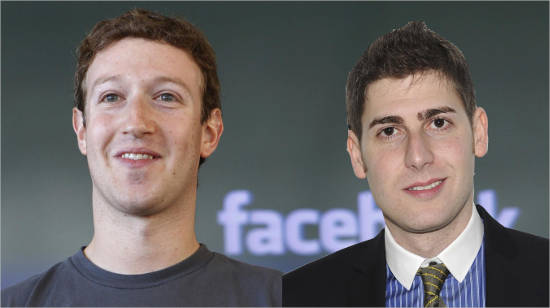
It was established by Mark Zuckerberg with his college roommate and fellow Harvard University student Eduardo Saverin.The site's membership was originally constrained by the creators to Harvard students, but was expanded to other schools in the Boston area, the Ivy League,and slowly most universities in the USA and Canada, corporations, and from September 2006, to everyone with a valid email address along with an age requirement of being 13 and older.
The site was set up as a kind of "hot or not" match for Harvard students. The site allowed people to compare two pupil pictures side-by-side and allow them to decide who was sexy or not.
I'm a bit drunk, not gonna lie. So what if it is not even 10 pm and it is a Tuesday night? What? The Kirkland dormitory facebook is available on my desktop and some of those folks have fairly horrendiedous facebook pics. I almost want to put some of those faces alongside images of a few farm animals and have people vote on which is more appealing.
Yea, it is on. I'm not exactly certain how the farm animals will fit into this whole thing but I like the notion of comparing two individuals together.
According to The Harvard Crimson, Facemash utilized "photos compiled by the internet facebooks of nine Houses, putting two alongside each other in a time and asking users to select the "hotter" individual".Facemash attracted 450 traffic and 22,000 photo-views in its first four hours online.
The site was quickly forwarded to a number of campus group list-servers, but was closed down a couple of days later by the Harvard administration. Zuckerberg faced expulsion and has been billed by the government with violation of security, violating copyrights, and violating privacy. Finally, the charges were dropped.Zuckerberg enlarged with this initial project that term by developing a social study tool before an art history final examination. He uploaded all artwork images to a site, each of which was featured with a corresponding remarks section, then shared the website with his classmates, and people began sharing notes.
On October 25, 2010, banker and entrepreneur Rahul Jain auctioned off FaceMash.com to an unidentified buyer for $30,201.

A "face book" is a student directory featuring photographs and fundamental information.In 2003,
there were no universal online facebooks in Harvard, with just paper sheets distributed and personal online directories.Zuckerberg told the Crimson that "Everybody's been talking a lot about a worldwide face publication within Harvard.I think it's kind of absurd that it would take the University a few years to get around to it. I will do it better than they could, and I could do it at a week.In January 2004 Zuckerberg started writing code for a new site, called "TheFacebook", together with the inspiration coming from an editorial in the Red about Facemash, saying that "It is apparent that the technology required to produce a centralized Website is easily available the benefits are many.On February 4, 2004, Zuckerberg launched "TheFacebook", initially located at thefacebook.com.
Zuckerberg also stated his intention to create a universal site which can connect people around the college. According to his roommate, Dustin Moskovitz, "When Mark completed the website, he told a few buddies then one of these suggested placing it on the Kirkland House online mailing list, which was three hundred people." Moskovitz continued to say that, "At the end of the night, we were actively observing the enrollment procedure.

Only six days after the initiation of the website,
three Harvard University seniors, Cameron Winklevoss, Tyler Winklevoss, and Divya Narendra, accused Zuckerberg of intentionally misleading them into thinking that he would help them build a social network called HarvardConnection.com, but rather using their idea to construct a competing product.The three complained to the Crimson, and the paper began an investigation. Zuckerberg knew about the investigation so that he used TheFacebook.com to locate members in the website who identified themselves as members of the Crimson. He analyzed a history of failed logins to find out whether any of the Red members have entered an incorrect password to TheFacebook.com. In the instances in which they had neglected to log in, Mark attempted to use them to get the Red members' Harvard email accounts, and he had been successful in obtaining two of them. In the long run, three Crimson members filed a lawsuit against Zuckerberg that was later settled. U Membership was originally restricted to students of Harvard University. Within the first month, over half of the undergraduate population at Harvard was enrolled on the service. In March 2004, Facebook enlarged to Stanford, Columbia, and Yale. This expansion continued as it started to all Ivy League and Boston-area schools. It slowly reached most universities in the USA and Canada.
On October 1, 2005, Facebook enlarged to twenty-one universities in the uk and other people around the world. Facebook established a high school variation in September 2005, which Zuckerberg called the upcoming logical step.At that time, higher school networks required an invitation to join.Facebook later enlarged membership eligibility to employees of many companies, including Apple Inc. and Microsoft. Facebook was subsequently opened on September 26, 2006 to everybody aged 13 and older with a valid email address.
Late in 2007, Facebook had 100,000 business webpages, allowing businesses to attract potential customers and share themselves. These began as group pages, but a new concept called company pages was intended.
In October 2008, Facebook announced it would set up its international headquarters in Dublin, Ireland.

In 2010, Facebook started to encourage users to become beta testers after passing a question-and-answer-based selection procedure,and a set of Facebook Engineering Puzzles where users could solve computational issues that gave them an opportunity to be hired by Facebook.
As of February 2011, Facebook had been the largest online photo host, being mentioned by Facebook program and online photo aggregator Pixable as hoping to have 100 billion photographs by summer 2011. As of October 2011, over 350 million users accessed Facebook through their cellular phones, accounting for 33 percent of Facebook traffic.

In its court filing, Yahoo reported that Facebook had infringed on ten of its patents covering advertising, privacy controls and social media. Yahoo had threatened to sue Facebook per month prior to the filing,insisting that the social network license its patents. A spokesperson for Facebook issued a statement saying "We are disappointed that Yahoo, a longtime business partner of Facebook and a business that has substantially benefited from its association with Facebook, has chosen to resort to litigation". The lawsuit claims that Yahoo's patents cover fundamental social media ideas like customizing site users' experiences to their own needs, including that the patents cover means of targeting advertisements to individual users. In 2012, Facebook App Center, an online cellular shop, was rolled out.
The store originally had 500 Facebook programs that were mostly games.

Thank You


No comments:
Post a Comment