Monday, 26 February 2018

History Of Facebook

History Of  Facebook

 Image result for facebook images

Facebook is a social networking service launched on February 4, 2004.


It was established by Mark Zuckerberg with his college roommate and fellow Harvard University student Eduardo Saverin.The site's membership was originally constrained by the creators to Harvard students, but was expanded to other schools in the Boston area, the Ivy League,and slowly most universities in the USA and Canada, corporations, and from September 2006, to everyone with a valid email address along with an age requirement of being 13 and older.
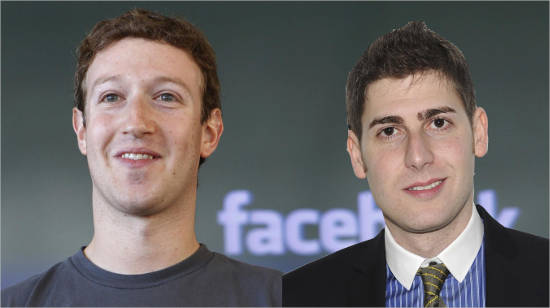
Image result for Eduardo facebook images

The site was set up as a kind of "hot or not" match for Harvard students. The site allowed people to compare two pupil pictures side-by-side and allow them to decide who was sexy or not.


I'm a bit drunk, not gonna lie. So what if it is not even 10 pm and it is a Tuesday night? What? The Kirkland dormitory facebook is available on my desktop and some of those folks have fairly horrendiedous facebook pics. I almost want to put some of those faces alongside images of a few farm animals and have people vote on which is more appealing.


Yea, it is on. I'm not exactly certain how the farm animals will fit into this whole thing but I like the notion of comparing two individuals together.
Image result for facebook images hd

According to The Harvard Crimson, Facemash utilized "photos compiled by the internet facebooks of nine Houses, putting two alongside each other in a time and asking users to select the "hotter" individual".Facemash attracted 450 traffic and 22,000 photo-views in its first four hours online.

The site was quickly forwarded to a number of campus group list-servers, but was closed down a couple of days later by the Harvard administration. Zuckerberg faced expulsion and has been billed by the government with violation of security, violating copyrights, and violating privacy. Finally, the charges were dropped.Zuckerberg enlarged with this initial project that term by developing a social study tool before an art history final examination. He uploaded all artwork images to a site, each of which was featured with a corresponding remarks section, then shared the website with his classmates, and people began sharing notes.

On October 25, 2010, banker and entrepreneur Rahul Jain auctioned off FaceMash.com to an unidentified buyer for $30,201.

Related image

A "face book" is a student directory featuring photographs and fundamental information.In 2003, 
 there were no universal online facebooks in Harvard, with just paper sheets distributed and personal online directories.Zuckerberg told the Crimson that "Everybody's been talking a lot about a worldwide face publication within Harvard.I think it's kind of absurd that it would take the University a few years to get around to it. I will do it better than they could, and I could do it at a week.In January 2004 Zuckerberg started writing code for a new site, called "TheFacebook", together with the inspiration coming from an editorial in the Red about Facemash, saying that "It is apparent that the technology required to produce a centralized Website is easily available the benefits are many.On February 4, 2004, Zuckerberg launched "TheFacebook", initially located at thefacebook.com.

Zuckerberg also stated his intention to create a universal site which can connect people around the college. According to his roommate, Dustin Moskovitz, "When Mark completed the website, he told a few buddies then one of these suggested placing it on the Kirkland House online mailing list, which was three hundred people." Moskovitz continued to say that, "At the end of the night, we were actively observing the enrollment procedure.

Image result for Dustin Moskovitz 

Only six days after the initiation of the website,
three Harvard University seniors, Cameron Winklevoss, Tyler Winklevoss, and Divya Narendra, accused Zuckerberg of intentionally misleading them into thinking that he would help them build a social network called HarvardConnection.com, but rather using their idea to construct a competing product.The three complained to the Crimson, and the paper began an investigation. Zuckerberg knew about the investigation so that he used TheFacebook.com to locate members in the website who identified themselves as members of the Crimson. He analyzed a history of failed logins to find out whether any of the Red members have entered an incorrect password to TheFacebook.com. In the instances in which they had neglected to log in, Mark attempted to use them to get the Red members' Harvard email accounts, and he had been successful in obtaining two of them. In the long run, three Crimson members filed a lawsuit against Zuckerberg that was later settled. U Membership was originally restricted to students of Harvard University. Within the first month, over half of the undergraduate population at Harvard was enrolled on the service. In March 2004, Facebook enlarged to Stanford, Columbia, and Yale. This expansion continued as it started to all Ivy League and Boston-area schools. It slowly reached most universities in the USA and Canada.

On October 1, 2005, Facebook enlarged to twenty-one universities in the uk and other people around the world. Facebook established a high school variation in September 2005, which Zuckerberg called the upcoming logical step.At that time, higher school networks required an invitation to join.Facebook later enlarged membership eligibility to employees of many companies, including Apple Inc. and Microsoft. Facebook was subsequently opened on September 26, 2006 to everybody aged 13 and older with a valid email address.

Late in 2007, Facebook had 100,000 business webpages, allowing businesses to attract potential customers and share themselves. These began as group pages, but a new concept called company pages was intended.

In October 2008, Facebook announced it would set up its international headquarters in Dublin, Ireland.


Image result for facebook images hd

In 2010, Facebook started to encourage users to become beta testers after passing a question-and-answer-based selection procedure,and a set of Facebook Engineering Puzzles where users could solve computational issues that gave them an opportunity to be hired by Facebook.
As of February 2011, Facebook had been the largest online photo host, being mentioned by Facebook program and online photo aggregator Pixable as hoping to have 100 billion photographs by summer 2011. As of October 2011, over 350 million users accessed Facebook through their cellular phones, accounting for 33 percent of Facebook traffic.

Related image

In its court filing, Yahoo reported that Facebook had infringed on ten of its patents covering advertising, privacy controls and social media. Yahoo had threatened to sue Facebook per month prior to the filing,insisting that the social network license its patents. A spokesperson for Facebook issued a statement saying "We are disappointed that Yahoo, a longtime business partner of Facebook and a business that has substantially benefited from its association with Facebook, has chosen to resort to litigation". The lawsuit claims that Yahoo's patents cover fundamental social media ideas like customizing site users' experiences to their own needs, including that the patents cover means of targeting advertisements to individual users. In 2012, Facebook App Center, an online cellular shop, was rolled out.
The store originally had 500 Facebook programs that were mostly games. 

Related image

Thank You

Thursday, 22 February 2018

History Of YouTube At a Glance


History Of  YouTube

Image result for youtube history images

YouTube was set by Chad Hurley, Steve Chen and Jawed Karim, who were early workers of PayPal. Hurley had studied design at Indiana University of Pennsylvania, and Chen and Karim studied computer science jointly in the University of Illinois in Urban - Campaign. According to a story that has been replicated in the media, Hurley and Chen developed the idea for YouTube through the first months of 2005, after they had experienced trouble sharing movies which was shot at a dinner celebration at Chen's apartment in San Francisco. Karim didn't attend the party and denied that it had happened, but Chen commented that the concept that YouTube was founded following a dinner party "was likely very strengthened by advertising ideas around developing a story that was quite digestible".

PayPal

 Related image

Karim said the inspiration for YouTube first came out of Janet Jackson's role in the 2004 Super Bowl episode, when her breast was exposed during her performance, and afterwards from the 2004 Indian Ocean tsunami. Karim could not readily find video clips of event online, which resulted in the notion of a video sharing site. Hurley and Chen reported the initial idea for YouTube was a movie version of an internet dating service, and was influenced by the site Hot or Not.

Google

Related image

The YouTube emblem from launch until 2011, featuring its former motto Broadcast Yourself
YouTube started as a venture capital-funded technology startup, largely by a $11.5 million investment by Sequoia Capital between November 2005 and April 2006. YouTube's ancient headquarters were located above a pizzeria and Japanese restaurant in San Mateo, California. The domain name www.youtube.com was activated on February 14, 2005, and the site was created over the following months. The first YouTube video, titled Me in the zoo, reveals co-founder Jawed Karim in the San Diego Zoo. The movie was uploaded on April 23, 2005, and can still be seen on the website. YouTube provided the public a beta test of the website in May 2005. After a $3.5 million investment from Sequoia Capital in November, the website started officially on December 15, 2005, by which time the website was getting 8 million views per day. The website grew rapidly and, in July 2006, the company announced that over 65,000 new videos were being uploaded daily, and that the website was getting 100 million video views each day. According to data released by market research firm comScore, YouTube is the dominant supplier of online video in america, with a market share of about 43 percent and over 14 billion viewpoints of movies in May 2010.

Image result for youtube logo 2006

In May 2011, 48 hours of new videos have been uploaded to the website every moment, which increased to 60 hours each minute in January 2012, 100 hours each minute in May 2013, 300 hours each minute in November 2014, and 400 hours every minute in February 2017. It's projected that in 2007 YouTube consumed as much bandwidth as the whole Internet in 2000. According to third party web analytics providers, Alexa and SimilarWeb, YouTube is the second-most visited site in the world, as of December 2016; SimilarWeb also lists YouTube as the top TV and movie site globally, bringing over 15 billion visitors a month.

The selection of the title www.youtube.com led to problems for a similarly named site, www.utube.com. The site's proprietor, Universal Tube & Rollform Equipment, filed a lawsuit against YouTube in November 2006 after being frequently bombarded by people searching for YouTube. Universal Tube has since changed the name of its site to www.utubeonline.com.
In March 2010, YouTube started free streaming of specific content, such as 60 cricket games of the Indian Premier League. In accordance with YouTube, this was the first global free internet broadcast of a major sporting event. On March 31, 2010, the YouTube site launched a new layout, with the intention of simplifying the interface and increasing the time users spend on the website. Google product manager Shiva Rajaraman commented: "We really felt like we had to step back and take out the clutter." In May 2010, YouTube videos have been watched over two billion times daily. In February 2017, one billion hours of YouTube was observed daily.
In October 2010, Hurley announced he would be stepping down as chief executive officer of YouTube to take an advisory role, which Salar Kamangar would take over as head of the business. In April 2011, James Zern, a YouTube software engineer, revealed that 30 percent of videos accounted for 99 percent of views on the website. In November 2011, the Google+ social networking site was incorporated directly with YouTube and the Chrome web browser, allowing YouTube videos to be seen from inside the Google + port.YouTube emblem from 2015 until 2017

YouTube

Related image

In December 2011, YouTube established a new version of the website interface, with the movie stations exhibited in a central column on the home page, like the news feeds of social networking websites. At exactly the exact same time, a new variant of the YouTube emblem was introduced using a darker shade of crimson, the initial change in layout since October 2006. In May 2013, YouTube established a pilot program to start offering some content providers the ability to bill $0.99 a month or more for certain stations, but the huge majority of its videos would stay free to view.
In February 2015, YouTube published a secondary cellular app called YouTube Kids. The program is designed to deliver an experience optimized for kids, and includes a simplified user interface, curated collections of stations comprising age-approriate content (including existing channels and entertainment brands), and parental control features. Later on August 26, 2015, YouTube launched YouTube Gambling--a movie gaming-oriented sub-site and program that's meant to compete with the Amazon.com-owned Twitch.tv. 2015 also saw the announcement of a premium YouTube service known as YouTube Red, which provides users with both ad-free content in addition to the ability to download movies among other capabilities. On August 10, 2015, Google announced that it was creating a new firm, Alphabet, to act as the holding company for Google, with the shift in financial reporting to start in the fourth quarter of 2015. YouTube stays as a subsidiary of Google.
On August 29, 2017, YouTube established a new logo, typeface, Colour scheme and other modifications to the look of its desktop and mobile program.

Thank You.

Tuesday, 13 February 2018

Bollywood History From the 1930s, the business was generating more than 200 films per annum.


Image result for amitabh bachchan

Bollywood History


From the 1930s, the business was generating more than 200 films per annum. 


The initial Indian audio movie, Ardeshir Irani's Alam Ara (1931), was a significant business success. There was a massive marketplace for talkies and musicals; Bollywood and of the regional film industries immediately changed to audio filming.

Most Bollywood movies were escapist, but there were also quite a few filmmakers who handled tough social problems, or utilized the struggle for Indian independence as a background for their own plots.

In 1937, Ardeshir Irani, of Alam Ara fame, created the very first color film in Hindi, Kisan Kanya. The following year, he left another color movie, a variation of Mother India. But, color didn't come to be a favorite characteristic before the late 1950s. At this moment, lavish romantic musicals and melodramas have been the basic fare in the theatre.

Image result for Alam Ara

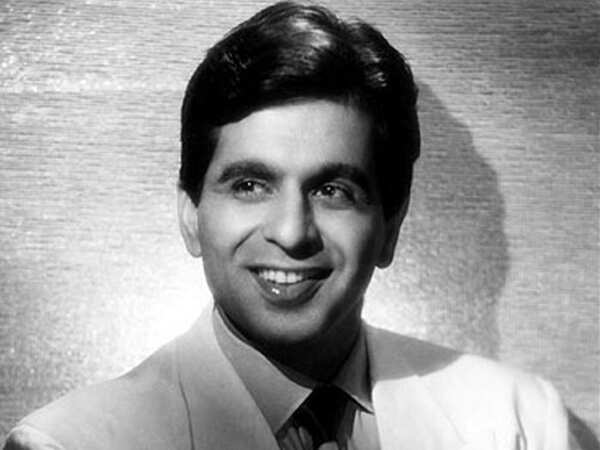
Before the 1947 partition of India, that had been split into the Republic of India and Pakistan, the Bombay film industry (currently called Bollywood) was closely into the Lahore movie industry (currently the Lollywood sector of Pakistani theater), as equally generated movies in Hindi-Urdu, or Hindustani, the lingua franca across central and northern India. From the 1940s, several celebrities, filmmakers and artists from the Lahore sector migrated into the Bombay sector, such as celebrities like K.L. Saigal, Prithviraj Kapoor, Dilip Kumar and Dev Anand and artists like Mohammed Rafi, Noorjahan and Shamshad Begum. Throughout that time, filmmakers and celebrities in the Bengali film industry established in Calcutta (now Kolkata) also started migrating into the Bombay film industry, which for decades following partition could be dominated by celebrities, filmmakers and musicians who have roots in what's now Pakistani Punjab, combined with people from Bengal.

Related image

After India's independence, the interval in the late 1940s into the early 1960s is viewed by film historians as the "Golden Age" of Hindi film.  One of the most critically acclaimed Hindi movies of all time have been created in this time. These pictures expressed societal topics mainly dealing with working lifetime in India, especially urban life at the prior two illustrations; Awaara introduced the town as both a nightmare and a dream, whilst Pyaasa critiqued the unreality of town life.

Mother India was also a significant movie that described the conventions of Hindi cinema for decades. Composed and created by Dilip Kumar, Gunga Jumna was a dacoit crime drama about two brothers on opposite sides of law enforcement, a motif that later became prevalent in Indian movies since the 1970s. One of the most well-known epic movies of Hindi cinema were also created at the moment, for example K. Asif's Mughal-e-Azam (1960). Other famous mainstream Hindi filmmakers in the time comprised Kamal Amrohi and Vijay Bhatt.

Image result for dev anand

The three most common male Indian celebrities of the 1950s and 1960s have been Dilip Kumar, Raj Kapoor, and Dev Anand, each with their own distinctive acting style. Kapoor followed the "tramp" design of Charlie Chaplin, Anand made himself following the "suave" design of Hollywood film stars such as Gregory Peck and Cary Grant, and Kumar initiated a kind of method acting which was comparable to nonetheless predated Hollywood strategy actors like Marlon Brando. Kumar, who had been depicted as "the greatest method actor" by Satyajit Ray and is regarded as one of India's best celebrities, motivated future generations of Indian celebrities; similar to Brando's influence on Robert De Niro and Al Pacino, Kumar had a similar effect on after Indian celebrities like Amitabh Bachchan, Naseeruddin Shah, Shah Rukh Khan and Nawazuddin Siddiqui.

Image result for amitabh bachchan

While commercial Hindi cinema was flourishing, the 1950s also saw the development of a brand new Parallel Cinema motion.  Although the motion was mainly directed by Bengali cinema, in addition, it started gaining prominence in Hindi film. The motion highlighted social realism. Early examples of movies in this motion include Dharti Ke Lal (1946) led by Khwaja Ahmad Abbas and according to the Bengal famine of 1943, respectively Neecha Nagar (1946) led by Chetan Anand and composed by Khwaja Ahmad Abbas, and Bimal Roy's Do Bigha Zamin (1953). Their critical acclaim, in addition to the latter's industrial success, paved the way for Indian neorealism and the Indian New Wave.  A number of the globally acclaimed Hindi filmmakers included with the motion comprised Mani Kaul, Kumar Shahani, Ketan Mehta, Govind Nihalani, Shyam Benegal and Vijaya Mehta.

In 2010. He was the first Indian actor to be Known as a "celebrity

 starring in 15 successive solo hit movies from 1969 to 1971.

Ever since the social realist movie Neecha Nagar won the Grand Prize in the earliest Cannes Film Festival, Hindi movies were often in competition for the Palme d'Or in the Cannes Film Festival during the 1950s and early 1960s, using a number of those winning major prizes in the festival. Guru Dutt, while missed in his life, had belatedly generated global recognition much later from the 1980s. Dutt has become considered as one of the most significant Asian filmmakers of all time, together with the famous Indian Bengali filmmaker Satyajit Ray. The 2002 Sight & Sound critics' and supervisors' survey of greatest filmmakers rated Dutt in No. 73 on the listing. A number of his movies are now included one of the best movies of all time, together with Pyaasa (1957) being featured in Time magazine "All-TIME" 100 best films record, and together with Pyaasa and Kaagaz Ke Phool (1959) tied at No. 160 at the 2002 Sight & Sound critics' and directors' survey of all time best movies.

From the late 1960s and early 1970s, the sector had been dominated by musical love movies using "romantic hero" leads, the hottest being Rajesh Khanna.
Image result for rajesh khanna

From the beginning of the 1970s, Hindi cinema was undergoing thematic stagnation,dominated by musical love movies. The coming of screenwriter duo Salim-Javed, comprising Salim Khan and Javed Akhtar, marked a paradigm change, revitalizing the business. They started the genre of gritty, violent, and Bombay underworld crime movies in the early 1970s, together with movies like Zanjeer (1973) and Deewaar (1975). They reinterpreted the rural topics of Mehboob Khan's Mother India (1957) and Dilip Kumar's Gunga Jumna (1961) at a modern urban context representing the Profession and socio-political climate of 1970s India,channeling the rising discontent and disillusionment among the masses,and unprecedented development of slums, and addressing topics involving urban poverty, and corruption, and crime,in addition to anti-establishment themes. This led in their generation of this "angry young man", personified by Amitabh Bachchan,that reinterpreted Dilip Kumar's functionality in Gunga Jumna at a modern urban context,and giving a voice to the angst of the metropolitan poor.

From the mid-1970s, intimate confections had made way for gritty, violent crime movies and action movies about gangsters (Bombay underworld) and bandits (dacoits). The composing of Salim-Javed and behaving of Amitabh Bachchan popularized the trend, together with movies like Zanjeer and especially Deewaar, a crime movie inspired by Gunga Jumna that pitted "a policeman against his brother, a group leader predicated on real-life smuggler Haji Mastan" portrayed by Bachchan; Deewaar was portrayed as being "absolutely crucial to Indian theatre" by Danny Boyle. Together with Bachchan, additional celebrities that rode the crest of the tendency include Feroz Khan, Mithun Chakraborty, Naseeruddin Shah, Jackie Shroff, Sanjay Dutt, Anil Kapoor and Sunny Deol, that continued to the early 1990s.

The 1970s was whenever the title "Bollywood" was filmed, and whenever the strangest conventions of industrial Bollywood movies were created. Crucial to this is the development of this masala movie genre, that combines elements of numerous genres (action, humor, romance, drama, melodrama, musical). The masala movie was initiated in the early 1970s by filmmaker Nasir Hussain,and screenwriter duo Salim-Javed, sparking the Bollywood blockbuster arrangement. Yaadon Ki Baarat (1973), led by Hussain and composed by Salim-Javed, was identified as the initial masala movie and also the "initial" quintessentially "Bollywood" movie. Salim-Javed went on to compose more successful masala movies in the 1970s and 1980s. Masala movies launched Amitabh Bachchan to the largest Bollywood film star of the 1970s and 1980s. A milestone for the masala movie genre has been Amar Akbar Anthony (1977),led by Manmohan Desai and composed by Kader Khan. Manmohan Desai went to successfully harness the genre in the 1970s and 1980s.

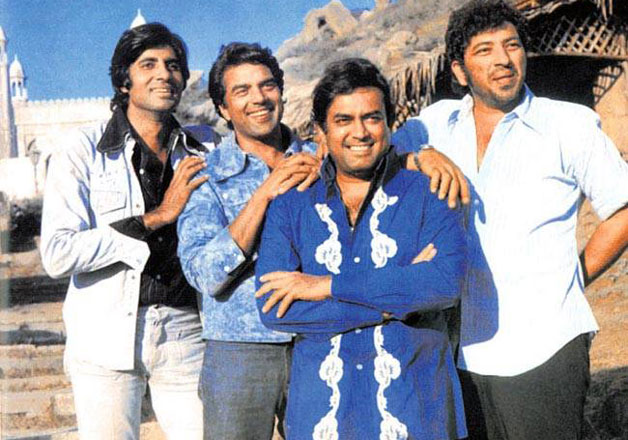
These two tendencies, the masala movie and the violent crime movie, are represented from the blockbuster Sholay (1975), composed by Salim-Javed and starring Amitabh Bachchan. It united the dacoit movie conventions of Mother India and Gunga Jumna with that of Spaghetti Westerns, spawning the Dacoit Western genre (also called the "Curry Western"), that was widely popular from the 1970s.

Image result for amitabh bachchan sholay

Some Hindi filmmakers like Shyam Benegal continued to create realistic Parallel Cinema through the 1970s, along with Mani Kaul, Kumar Shahani, Ketan Mehta, Govind Nihalani and Vijaya Mehta. But, the 'art movie' bent of the Film Finance Corporation came under criticism through a Committee on Public Undertakings evaluation in 1976, which accused the entire body rather than doing enough to promote commercial theatre. The 1970s thus watched the growth of commercial theatre in the shape of enduring movies like Sholay (1975), which merged Amitabh Bachchan's standing as a lead performer. The devotional classic Jai Santoshi Ma was also published in 1975.

The most globally acclaimed Hindi picture of the 1980s has been Mira Nair's Salaam Bombay!
New Bollywood (1990s--current)

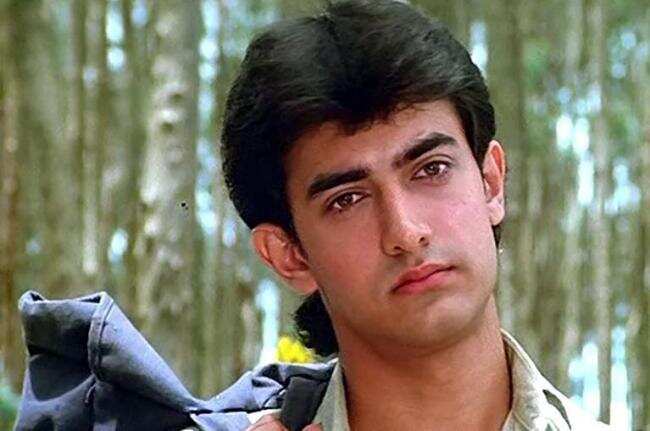
From the late 1980s, Hindi theater underwent another phase of stagnation, with a drop in box office turnout, because of rising violence, decrease in musical melodic quality, and increase in movie piracy, resulting in middle-class family audiences left theaters. The turning point came with Qayamat Se Qayamat Tak (1988), led by Mansoor Khan, composed and created by his dad Nasir Hussain, also starring his cousin Aamir Khan together with Juhi Chawla. Its mix of youthfulness, healthy entertainment, psychological quotients and powerful melodies enticed family audiences back into the screen.

The span of Hindi cinema from the 1990s Onwards is known as "New Bollywood" theater, connected to economic liberalisation in India through the early 1990s. At the time period, action movies and comedy films were effective, with celebrities such as Govinda, Sunny Deol, Sunil Shetty, Akshay Kumar, and Ajay Devgan, together with Akshay Kumar gaining popularity for performing hazardous stunts in action movies in his famous Khiladi (movie series) along with other action movies.

 Related image

This decade also marked the entrance of new actors in Art house and independent films, some of which succeeded commercially, the strongest illustration being Satya, directed by Ram Gopal Varma and composed by Anurag Kashyap. The commercial and critical success of Satya resulted in the development of another genre called Mumbai noir,urban movies representing societal issues in the city of Mumbai. This Resulted in a resurgence of Parallel Cinema at the end of the decade. These pictures often featured celebrities such as Nana Patekar and Manoj Bajpai, and actresses such as Manisha Koirala, Tabu, Pooja Bhatt and Urmila Matondkar, whose performances have been generally critically acclaimed.

Aamir Khan


Among those "Three Khans", in 2008. He's become the very successful Indian performer since the late 2000s.
 Related image
Combined, they've starred at the top ten highest-grossing Bollywood movies. Both Khans have had successful careers since the late 1980s,and have mastered the Indian box office as the 1990s, over three years. Shah Rukh Khan has been the very successful Indian celebrity for most of the 1990s and 2000s, while Aamir Khan was the strongest Indian celebrity since the late 2000s; in accordance with Forbes, Aamir Khan is "arguably the world's biggest film star" at 2017, because of his immense fame in the planet's two most populous countries, India and China.

The 2000s saw a rise in Bollywood's fame throughout the world because of a growing and booming NRI and Desi communities abroad. A quick increase in the Indian market and a requirement for quality entertainment in this age, led the country's film-making to brand new heights concerning production values, cinematography and innovative story lines in addition to technological advances in areas like special effects and animation. A number of the greatest production houses, one of them Yash Raj Movies and Dharma Productions were the manufacturers of fresh contemporary movies.

Image result for salman khan

From the 2010s, the sector saw the tendency of established film stars such as Salman Khan, Akshay Kumar and Shahrukh Khan manufacturing big-budget masala entertainers such as Dabangg (2010), Ek Tha Tiger (2012), Rowdy Rathore (2012), Chennai Express (2013), Kick (2014) and Happy New Year (2014) reverse considerably younger actresses. These pictures were frequently not the topic of critical acclaim, but were nevertheless important commercial successes. On the flip side, Aamir Khan was imputed for redefining and modernizing the masala movie (which originated out of his uncle Nasir Hussain's Yaadon Ki Baarat, which he appeared in) together with his own distinct brand of socially conscious cinema from the early 21st century, making both commercial success and critical acclaim.

Image result for new actors bollywood

While many celebrities in the 2000s continued their successful careers to the next decade, the 2010s also saw the growth of a new production of popular actors such as Ranbir Kapoor, Ranveer Singh, Varun Dhawan, Sidharth Malhotra, Sushant Singh Rajput, Arjun Kapoor, Aditya Roy Kapur and Tiger Shroff, in Addition to actresses such as Vidya Balan, Kangana Ranaut, Deepika Padukone, Sonam Kapoor, Anushka Sharma, Sonakshi Sinha, Jacqueline Fernandez, Shraddha Kapoor and Alia Bhatt, together with Balan and Ranaut gaining broad recognition for effective female-centric movies like the Dirty Picture (2011), Kahaani (2012) and Queen (2014), along with Tanu Weds Manu Returns (2015). Kareena Kapoor and Bipasha Basu are amongst the few operating actresses in the 2000s who successfully completed 15 years in the business.

Related image

 Was the useful?

History of Twitter


History of Twitter

Imagine a situation where you are gainfully employed but spending your weekends and nights working on a side job. 

 It is just something you have been mashing together on your spare time with a couple friends on the job. 

 Now, feign to see yourself five years into the future and find out that your small side project turned into one of the greatest communications technologies of the previous 100 decades.

Here is the foundation of Twitter.
Dorsey had initially imagined Twitter within an SMS-based communications system. Groups of friends could keep tabs on exactly what each other were doing according to their status upgrades. Like texting, however not.

During a brainstorming session in the podcasting company Odeo. Evan, along with his co-founder Biz Stone (@Biz) by expansion, gave Jack the go-ahead to invest additional time on the job and develop it further.

At the moment, a popular fad, occasionally to acquire domain benefit, was to fall vowels from the name of the businesses and services.


Many would agree that is also the right arrangement of participation.

The Very First Tweet


Throughout the growth of Twitter, staff members would often stand up tens of thousands of dollars in SMS fees to their private phone bills.

While the first idea of Twitter was being analyzed at Odeo, the business was going through a rough spot. Faced with all the brutal reality that Apple had just introduced its podcasting platform that basically killed Odeo's business design, the creators chose to purchase their business back from the shareholders.


As a result, they obtained the rights to the Twitter platform. There's a controversy surrounding this happened. It is doubtful whether Odeo investors understood the complete range of this Twitter platform.

Additionally, primary members of this Twitter development group weren't brought to the new firm, most importantly, Noah Glass.

As a gimmick, Obvious Corporation (@obviouscorp) was established following the investor buyback of Odeo so as to home Twitter.


Twitter was currently on the cusp of its main growth spurt. The 2007 South By Southwest (@sxsw) Interactive convention saw a massive explosion of Twitter use. Over 60 million Tweets were shipped daily in the occasion.

As a side note, I joined Twitter a month after in the very first Internet 2.0 Expo (@w2e) at San Francisco. After discovering attendee Tweets streaming on a major screen in the lobby, I wholeheartedly spent all day trying to determine ways to receive my words in lighting. Not that afternoon, anyhow.

It is safe to state Twitter had its fair share of growing pains during its long term. Twitter's user base grew at astonishing prices and rather often the service could be over capability.

When this happened, an example by artist Yiying Lu (@YiyingLu) appeared on the monitor. The case featured a whale being lifted from their water from eight birds to security.

The Twitter staff used this picture because they believed it represented the recognition of the issue and that they had been working on it.
Can It Be A 140 Personality Restrict or 280 Character Limit?

At one stage, you might have questioned why you can just Tweet 280 characters.

The main reason for such a particular restriction is that Twitter was initially made as an SMS cellular phone-based platform. In its first days, 140 personalities were the limitation that cellular carriers levied with SMS protocol regular therefore Twitter was only visually restricted. As Twitter finally grew into an internet system, the 140-character limit stayed as an issue of branding.


In 2017, nevertheless, Twitter determined the 140-character limitation was no longer applicable in the smartphone era and it improved the conversation limitation to 280 characters over small protestations. Many tweets, the business clarified, hover about 50 personalities; when individuals needed more personalities, they just sent more tweets. The character growth was made to assist Twitter users spend less time condensing their ideas and more time speaking.
User Innovation

Since Twitter's user base began growing, a funny thing began to happen. Consumers were producing new jargon and various methods to utilize the service. Consider it as invention born from necessity.


Originally, users had no method of responding or crying out yet another on Twitter. Some users could comprise a @ symbol before their username to recognize another user inside a Tweet.

This is such a common approach to admit another user the Twitter team included the operation to the Twitter platform. The identical thing occurred with hashtags, that are currently an essential component of this Twitter ecosystem.

This user-driven performance can also be accurate for how retweets we are born. Users wanted a means to re-post a message by a Twitter user whilst adding credit to the consumer that initially tweeted it.

Users began to include RT before sending the message, suggesting for their followers the subsequent tweet has been a report. Back in August 2010, this operation was added to the stage.
In six decades, Twitters' user base has increased to more than 200 million active monthly customers. And most recently in March 2013, both Jack and Biz were given the patent that they employed for back in 2007 that simplifies the total Twitter ecosystem.


Was this page useful?

Monday, 12 February 2018

SAMSUNG HISTORY

                 SAMSUNG HISTORY (1938 - 2018)


 Who Based Samsung, when Samsung was Born, along with other Details


The Samsung Group is a South Korean established conglomerate firm that comes with a range of subsidiaries. It is among the biggest companies in Korea, generating virtually one-fifth of the nation's total exports using a key focus in the electronic equipment, heavy industry, construction, and protection businesses.

Other significant subsidiaries of Samsung contain advertising, insurance, and entertainment sector companies.
Samsung History

The little business of just 40 employees began as a grocery shop, exporting and trading products produced in the vicinity of town, such as dried Korean fish and veggies, in addition to its noodles.

The business grew, and shortly expanded to Seoul in 1947 but abandoned after the Korean War broke out.

The successful diversification turned into a growth plan for Samsung, which quickly expanded into the securities, insurance, and retail enterprise. Samsung was concentrated on the redevelopment of Korea following the war using a fundamental focus on industrialization.

Samsung entered the electronics business from the 1960's with the creation of many electronics concentrated divisions.


 Samsung assembled their first centers in Suwon, South Korea, in 1970, in which they began creating black and white television sets.


Between 1972 and 1979, Samsung started selling washing machines, altered to Samsung Petrochemical after which Samsung Heavy Industries and from 1976, had sold its 1 millionth B&W television.

Back in 1977, they began exporting colour TVs, and based Samsung Construction, Samsung Fine Chemicals, and Samsung Precision Co. (currently called Samsung Techwin).
1980 to Present

Originally building phone switchboards, Samsung enlarged into phone and fax systems that eventually shifted to cellular phone production.

The cell phone company was bundled with Samsung Electronics, which started to invest heavily in research and development during the 1980's.

Back in 1987 with the passing of Lee Byung-chull, the Samsung team was split into four business groups leaving the Samsung Group using electronic equipment, engineering, structure, and many high-tech goods.


Samsung climbed as an global business through the 1990's.

The building division of Samsung procured several high-profile building jobs, including among the Petronas Towers in Malaysia, Taipei 101 in Taiwan along with also the half-mile tall Burj Khalifa Tower at the UAE.


In 1993, Samsung started to concentrate on three sectors - engineering, electronics, and compounds. The reorganization included selling ten subsidiaries and downsizing. With a renewed attention in electronic equipment, Samsung spent in LCD technology, getting the largest producer of LCD panels from the world by 2005.


Sony partnered with Samsung in 2006 to create a steady source of LCD panels for the two businesses, which was a growing problem for Sony, which hadn't invested in massive LCD panels. While the venture was almost a 50-50 split, Samsung possessed one share over Sony, giving them control over the production. In the end of 2011, Samsung purchased Sony's stake in the venture and took complete control.

Samsung's attention in the future relies on five core companies including cellular, electronic equipment and bio pharmaceuticals. Included in its bio-pharma investment, Samsung formed a joint partnership together with Bio gen, investing $255 million to provide technical advancement and bio pharmaceutical manufacturing capability in South Korea. Samsung has budgeted almost $2 billion in extra investment to pursue their bio-pharma growth plan and leverage the benefits of the joint venture.

Samsung has also continued to expand from the cell phone marketplace, becoming the biggest manufacturer of cellular phones in 2012. To stay a dominant producer, Samsung has earmarked $3-4 billion to update their Austin Texas semiconductor manufacturing center.

Samsung announced the Gear VR at September 2014, which will be a virtual reality apparatus developed to be used with the Galaxy Note 4. Additionally in 2014, Samsung announced they'd start promoting fiber optics to glass producer Corning Inc..


From 2015, Samsung had more US patents accepted than any other firm, being awarded on 7,500 utility patents prior to the close of the year.

Samsung published a fitness smartwatch at 2016 called Gear Match two, in addition to wireless earbuds called Gear Icon X. At the close of the calendar year, the Gear G3 smartwatch was declared. In late 2017, the business continued to launch merchandise: The Galaxy Note 8 was a specific triumph for the firm, which had fought with manufacturing problems during the launch of the Galaxy Notice 7.


Thursday, 1 February 2018

Google's History

                             Google's History


Google's first data centre was Larry Page's dorm room.

Google's history is a narrative of classic entrepreneurialism, challenging labour, and a bit of luck. From modest beginnings, the business has become online marketing, cloud computing, applications, and hardware alternatives. Alexa, a company that monitors commercial traffic, lists Google.com as the most visited site on the planet. Google's mission statement is "to organize the world's information and make it universally useful and accessible" but also comes with an unofficial announcement that is "Do not be evil". Some may chuckle at this, since Google's altruistic assignment was increasingly called into uncertainty because of several activities that seem to contradict this slogan. So how can they get it? This is our brief biography of that which, virtually, you have to learn about Google's history.
Google's history started in 1995 when Larry Page fulfilled Sergey Brin. In that time Larry Page was a Ph.D. student at Standford University, also Sergey was contemplating studying there. Back in 1996 Larry and Sergey started work on an internet search engine called BackRub. The title stems from the algorithms rank for the number of "back-links" a webpage has. This engine functioned to the Stanford servers for at least a year that finally clogged up bandwidth. Google.com was enrolled on September 15th, 1997.
It's theorized that this reflects the founders' mission to arrange the infinite quantity of information online. In 1998 Larry established a monthly publication called "Google Friends Newsletter" to inform fans about the business. It has been replaced with sites like Google+. Originally, there was no method to deposit this test, so it had been made out to "Google Inc.". There was not a legal entity with this title in the moment. The test sat in Page's desk drawer for 2 weeks while he and Brin hurried to establish a company and find different investors. Should you prefer Google's doodles, then you may want to know that the very first one has been that the iconic "Burning Man" icon. This was to allow users understand where the group was for the upcoming few days - nice bit. The door came with a remote controller as it had been connected to the garage of a friend who sublet space to the new company. Google also hired its first employee Craig Silverstein that has remained together for at least ten years prior to joining the following startup Khan Academy. Back in 1999, Google transferred out of its humble garage into its new digs at 165 University Avenue, Palo Alto. Currently they were eight workers powerful.


Additionally, their earliest most significant staff member, Yoshka the puppy, joined the group.

His prior claim to fame has been catering to the Grateful Dead. Now Google's food plans concentrate on providing healthy, sustainably sourced meals to fuel Googlers across the world. Andy Bechtolsheim foresight is remarkable and his bet really repaid. Bessemer Investments spouse, David Cowan, failed to fulfill Sergey Brin and Larry Page whilst they had been leasing a garage by their buddy. That is surely a choice Mr. Cowan kicks himself with each day. Another missed chance appeared back in the first weeks of 1999 when Sergey and Larry were tasked with selling their job to concentrate on their research. George Bell, CEO of Excite, has been approached using a $1M buyout offer. George, in his intellect, refused this "preposterous" offer. Based on George Bell, they requested for an investment rather. George explained he refused the counter offerings and allow the idea drop. Approximately 5 or 2 months after Kleiner Perkins Caufield and Byers and Sequoia Capital consented to an investment of $25 Million to Google.
These venture capital companies were normally ferocious opponents. Seeing its potential, but they took seats on the board of supervisors. Despite of the new financing, once the board met, they all sat around a ping-pong table. As striking as these missed supplies are they're trumped by the narrative of Oingo and James Altucher. They're called Google AdSense today. For this day Alphabet Inc (the restructured title for Google), is based on NASDAQ with a market capitalization of about $560B. Applied Semantics, 1 percentage inventory, could be worth nearly $1.5B now. Here is the story. A giant drops - Yahoo! Yahoo! one time a giant of the world wide web has attempted and failed to rekindle interest in its own product. Its merger with Verizon indicated the ending of an era for a business which once defined the world wide web.
Its golden age was from the '90's however its failure to keep up with current trends finally sealed its own fate. It could be argued that a significant contributor was additionally its executives' missed chances. Larry and Sergey originally wished to be academics rather than begin a small business. After creating their first search engine that they attempted to sell off it, as you have seen. They had been attempting to market it for about $ 1 million in 1997. After fruitlessly traveled throughout Silicon Valley, they eventually went to Yahoo!. Yahoo! turned down them. Yahoo! had directories which were developed to answer inquiries, view mails etc.
This notion seemed to function well in the moment. Having an "In case it ai not broke do not fix it" type of mindset, they did not desire their consumer to leave their stage and prohibits purchasing PageRank algorithm which is employed by rank connections of third parties. As we all now know the entire world came to see the significance of third party internet earnings.

Google built its pay-per-click service, AdWords, that has become the largest contributor for their present success.

They had to raise $3 Billion in capital. Terry Semel, then Yahoo! Chief, after more denied the deal since Yahoo! was seeking to construct its response to Google. Yahoo! gained research engine Inktomi and advertising revenue manufacturer Overture in its assignment to construct the search engine which could topple Google. Regrettably, Yahoo! failed in its own tasks. The business has since been absorbed to Verizon's AOL online business. Semel and his board of Directors must definitely regret their two missing chances with Google. If Yahoo! had consented to the deal with Google co-owners in its older times, Yahoo!'s destiny could possibly hold another story. Google's defining feature of predictive research text had its roots in 2000 when MentalPlex was initially deployed. This allowed Google to get involved in Silicon Valley's heritage of April Fools day hoaxes. Other millennial improvements to Google included doodle collection, multilingualism, global parties (Bastille Day) and critically to many bloggers, the arrival of Google Adwords. Google toolbar, a plugin which enables the user to look without opening the homepage has also started. A fairly successful year to be honest at Google's history. 2001 watched Google's initial public acquisition, Deja.com Usenet Discussion Service, that was a record of 500 million consumer talks dating back to 1995. They included "joke languages" such as "Klingon" and started Google Images. Google also established their very first global office in Tokyo.


Furthermore, in 2001, Google published their first annual "Google Zeitgeist" that have a peek at what millions of people searched for over the preceding calendar year.

Moving from strength to strength In 2002, Google began further helping companies with its Google Search Appliance and additional cost-per-click pricing to its Adwords. Google Labs was likewise born in 2012. Furthermore, Google started their first office in Australia. AdSense lets companies connect with enormous networks of advertisers. Google also launched Google Grants, a nonprofit version of AdWords. Google climbed so fast that its offices have stuffed up. Employees could not stand up in their desks with no the others tucking their seats in first.

In 2004 Google's employees had migrated to 800+ employees.

On April fools day Gmail was established, initially an invite-only service, it currently has over 425 million consumers. Google also obtained Picasa. In any case, Google recorded itself on the stock exchange, offering the people 19,605,052 category A shares at $85 per - wish I had bought some. In December Google based Google.org that was committed to the concept that technology could change the entire world. 2005 was just another defining year in Google's history. Google Maps was created with satellite imagery and instructions added a couple of weeks later.

YouTube's (not yet part of Google) initial movie went online.


Phone programs became a huge part of how Google's plan in 2005 with search applications and Google Maps moving to cellular platforms. Google Analytics was established this season to assist programmers quantify their advertising effect and still an extremely helpful instrument now. Google was added into the Oxford English Dictionary at 2006. Youtube was obtained by Google this season. Google has been rated number one firm to utilize by "Fortune" in 2007. Streetview debuted this season originally in U.S. cities. It's currently available in over 50 nations. Android has been also established in 2007. Google Chrome was created in 2008 and quickly became one of the most used browsers. Google also hired several goats to wash up their Googleplex campus grounds to clean brush and reduce fire dangers. The sky is your limit Google enlarged into online delivery by using their strategy to construct ultra high-speed broadband networks in 2010. To be able to demonstrate transparency, Google also printed information to eliminate content from their goods in addition to cable and blocking cutting government requests around the world. As a part of the attempts to accelerate the installation of renewable energy, Google created their first lead investment at a utility-scale renewable energy project.

Google announced their strategy to create self-driving cars too in 2010.


Google+ started in 2011 using Google Drive published a year after in 2012. Back in August 2011, reports estimated that Google had nearly one thousand servers in data centres across the globe. Setup of Google Fiber started in 2012 providing consumers in Kansas. The Global Impact awards are produced to support entrepreneurs using technology to handle individual challenges. Do not stop me now In 2013, Google awakened their devotion to renewable energy by investing $200 million at a wind farm in Texas. The business introduced their plan to present balloon-powered online access, so-called "Project Loon". Google teamed up with Starbucks to offer free WiFi to all Starbucks shops in the U.S. In 2014 Google obtained Nest and additional Street View vision of the Canadian Tundra so that consumers can find an intimate perspective of Polar Bears in their natural habitat. In 2015 Google declared their plans to re-organize its pursuits to a conglomerate called Alphabet. Google would continue to function as umbrella firm, however. Google's iconic emblem has undergone several alterations and revivals during its history. The very first emblem, made by Brin, was made using GIMP. Google introduced its revised emblem in September 2015. Ahead of this, its prior emblem, made by graphic designer Ruth Kadar, has been utilized between 1999 and 2013. The script was based on the Catull typefacThe provider's emblem also regularly undergoes alterations, like animations for vacations, birthdays for famous people or important events.
These distinctive logos, some created by Dennis Hwang, have been known as Google Doodles. However, what about the colours? Graphic designer Ruth Kedar clarifies "There were lots of different colour iterations", "We ended up with the main colours, but rather than getting the layout go in sequence, we place a secondary colour on the L, which brought back the concept that Google does not adhere to the principles." The highly familiar emblem received its first "important" overhaul in 2010. The new logo, that previewed in November of 2009 was formally established in May of 2010. Though not an tremendous change, after it all utilized the exact same typeface however, the "o" needed a facelift. It is formerly yellowish "o" was substituted with a clearly more orange tone. 2013 introduced a new "apartment" emblem using a slightly altered color palette. In 2014, Google updated their emblem once more using the next "g" transferred into the right by a pixel and the "l" right down and right 1 pixel. September 2015 watched the debut of Google's "new symbol and individuality family".
This was made to work across several devices. The gap in the logo is the shift in the typeface. The colors stayed the same; nonetheless, Google switched into a contemporary, geometric sans-serif typeface called Product Sans, made in house at Google and employed for the Alphabet emblem.

15 items you may not have understood about Google Carl Page, Larry's brother, helped begin eGroups and dot.com business from the 90's.

It had been purchased for nearly half a million dollars in 2000 from Yahoo. If Google had flopped, Larry likely would have been fine - fine. Birds of feather A little-known chap called Robin Li had developed a similar notion to Google if he worked for a firm owned by Dow Jones. Both suggestions were predicated on the notion of rank pages on hyperlinks not content. Dow Jones were not certain what to do with the thought (called RankDex) and Li left the organization and proceeded to China. Here is his patent record. And this is google's record. Stanford sell out You might intuitively believe that this relies on the ranking method but it's really named after Larry Page. The patent for that remains held by Stanford. They obtained 1.8millimeter stocks of their ultimate company of Google, which they offered in 2005 for $336 million. Goes to prove that encouraging programmers in academia really can pay off. Oblivion PageRank not just rankings on pages based on links, it's also able to reveal which "species" are going to go extinct.
In effect, it operates by deciding which pages have the most connections to them and consequently are not as inclined to vanish into obscurity. Pretty neat. What's politics Were you aware they don't create any political contributions? Their contemporaries do, nevertheless. Google as a thing, on the other hand, is always lobbying. This past year, Google spent about this than Yahoo, Facebook and Apple combined. It's projected that the

"I'm Feeling Lucky" button price's Google $110 million in advertising revenue per year.


When you click that button it only requires you to the very best search result. To put it differently, you bypass all of the ads that Google makes money on. . Results from focus groups have revealed that individuals feel much more comfortable using the button. Interestingly user really seldom "feel lucky", nevertheless. It is barely ever used. Number One Worker Google's very first worker, Craig Silverstein continued working in the firm until 2012.

Though he had moved up the ladder a little. It's estimated that his overall value is about $950 million.


What's Google's homepage so dull? It's rumored the webpage is indeed sparse since the founders did not know HTML code and just wanted a fast interface. Additionally initially there was not a "submit" button. Users needed to hit the "return" key to create a Google search. Its usefulness is evident to anybody who has used their search engine, particularly the incorporation of its own convenient spellchecker. Brin and webpage used to hang out across the Stanford Computer Science Department loading docks. Their expectation was to borrow just arrived PC's to use in their own community.

Vivo V9 Design Launch on 27 March In India .....Get Update

Vivo V9 Design Thorough via Leaked Live Images Ahead of March 27 India Launch     Vivo V9 is expected to start in India in case ...